Category Archives: Green-Gulch-farm-zen-center-Marin
Green Gulch Zen Center: K-8 Community Education Program

One audience that we would like to bring into the Green Gulch Zen Center community is the children of the San Francisco Bay Area, particularly children in urban environments. Subjected to increased academic pressures, standardized testing and technological overloads, children living in urban environments are receiving less time for experiencing nature, practicing mindfulness and, frankly, just being kids. We are proposing to create a curriculum for elementary school children in the Bay Area which would teach them about a number of aspects of life at Green Gulch – including meditation, organic gardening, environmental preservation and Native American history. As 4th grade is typically designated for a curriculum around California history, this would be the ideal time to incorporate our proposed curriculum into their learning. This curriculum would be taught in the spring in the months leading up to summer vacation – and would span across academic subjects.
Green Gulch Zen Center: Wildlife

In order to understand the deep connection of the Green Gulch Zen community to the land, one must first have an understand of the history behind how the Zen Center came to acquire the land. At the time of the arrival of the Europeans, the watershed was in habited by the Coast Miwok tribe. The known history of the land between the 1800’s and mid-1900’s was that it was used for farming. In 1945, George Wheelwright, co-founder of Polaroid, purchased the land and turned the property into a family farm, which included the present day organic farm, as well as a number of dairy cows. Although Wheelwright was, in many ways, very connected to the land of Green Gulch, his intent to create a pasture for his livestock meant the construction of a dam, levees and drainage channels to divert the Redwood Creek, which runs through the property into the Pacific Ocean.
In 1972, Wheelwright sold the Green Gulch Farm to the Zen Center on two conditions: that members of Green Gulch Zen Center would maintain the working farm and, “in the spirit of the surrounding Golden Gate National Recreation Authority property,” remain open to rhe public for trails. Although use of the land belongs to the Green Gulch Zen Center, the area itself is an inholding of the National Park Service, with whom the Zen Center works closely to protect and conserve the land.
One of the founding principles of the Green Gulch Zen Center is that humans need to protect the environment from us, not the other way around. The community of Green Gulch has been, and continues to be, actively working to live harmoniously with the surrounding nature and to take measures to protect it.
Green Gulch Farm is the habitat of many diverse species of wildlife, including fish, birds, mammals and plants. The Redwood Creek, which runs through the property, is an essential spawning and rearing ground for coho salmon, steelhead trout and coastal cutthroat. In 2005, the coho salmon were listed as a federally endangered species and between 2007 and 2009, no salmon were seen during the winter run. However, in 2010, around 40 salmon were spotted and produced 23 clusters of eggs. This number however is only about 1% of the 1940 levels of coho salmon.The Green Gulch property is also home to many native songbirds, as well as numerous egrets and the Northern Spotted Owl. The pond that sits in the middle of the property was excavated by the National Park Service in 2009, to provide a habitat for the California Red-legged Frog.
Green Gulch is currently collaborating with the Park Service on a plan to restore the marshland in the lower fields. This plan, which would involve removing the parking lot that currently overlooks Muir Beach, in order to restore the land to its original marshland form. Through their work with NPS, they have “been studying the ecology of our watershed and asking ourselves questions about how the land might look and behave if left to itself.” One part of this process would involve removing the concrete channels which currently hold the stream flow, and allow this to run through the lower fields, now used for agricultural purposes.
Green Gulch Zen Center: Buddhist for a Day Program

Garden Center Statue at Green Gulch Farm Zen Center in Marin, CA
Buddhist for a Day Program: This program will allow people to experience the daily life of a monk. Extra activities will be included to enrich the guest’s experience, but the overall day will focus on learning about Zen Buddhism and Green Gulch. People interested in learning about the Buddhist lifestyle will benefit from the day. The following themes will be addressed: culinary through cooking classes, landscape through garden work, and spirituality through Zen practice. The specific audiences focused on include students of Zen Buddhism, Bay Area residents and international visitors.
Green Gulch Zen Center: Themes and Appraisal of Significance
The cultural heritage significance of Green Gulch Zen Center lies in its day-to-day practice within the normal parameters of life. We have classified several themes surrounding the site, which we feel contribute to its cultural heritage importance.
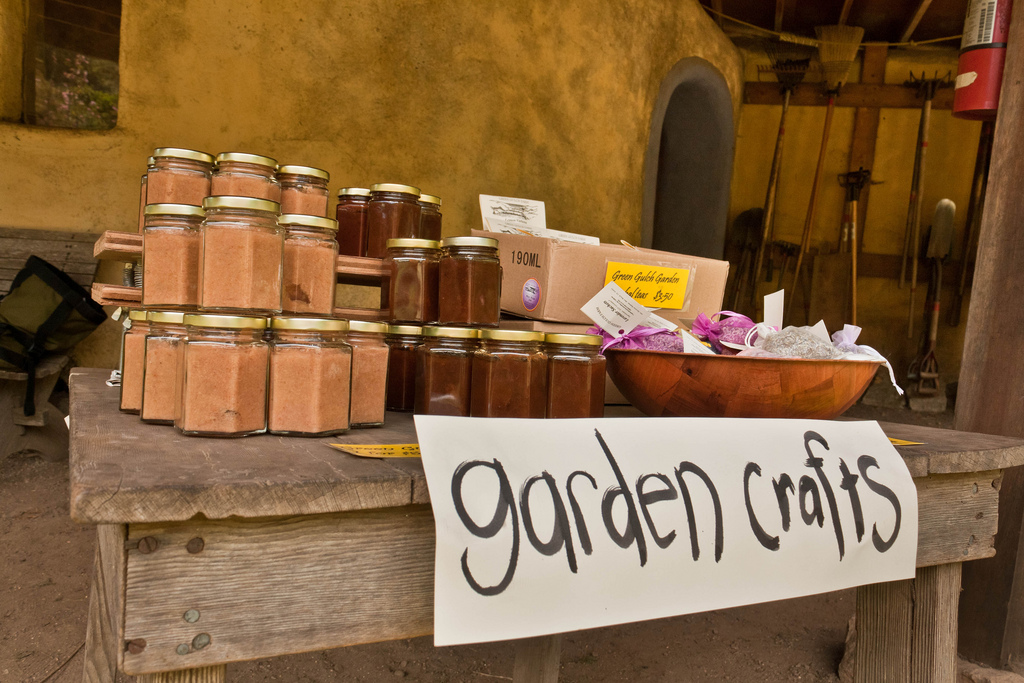
Outside of the garden center, a table is set out with jams and teas made from the garden.
Culinary
The connections between food and community are apparent at Green Gulch. The food preparation and sharing is a strong part of the Green Gulch experience. Through our K-8 program, we hope to educate children about the process of growing food and to use Green Gulch as a model for sustainable culinary practices. One potential challenge we foresee are distribution channels of food around local areas and furthermore internationally.
Landscape
This theme relates the spiritual nature of Green Gulch with the surrounding landscape. While the zendo is the place where formal meditation takes place, the entire property is a place of worship – through hiking the trails, enjoying the gardens and working the farm.
Preservation of nature
Since Green Gulch was founded in 1973, members of the Green Gulch community have focused on respect and cooperation with nature. Our proposed nature center would incorporate Buddhist teachings with educational guides for visitors, as well as work actively to sustain and preserve endangered wildlife.
History of Green Gulch and Surrounding Area
One theme that we feel would appeal to many visitors is using Green Gulch as a resource for those interested in Marin history. Because of its rich history in the area and cooperation with the land, we feel that Green Gulch is an ideal space for teaching others about the various transformations that Marin has gone through in the past few centuries. Archiving Green Gulch history along the line of archaeology, anthropology, and various other discourses will allow for the broader importance and modern relevance to contemporary issues that Green Gulch is addressing directly, for example through their on-site gardens and Green Restaurants.
Green Gulch Zen Center: Cultural Heritage Significance
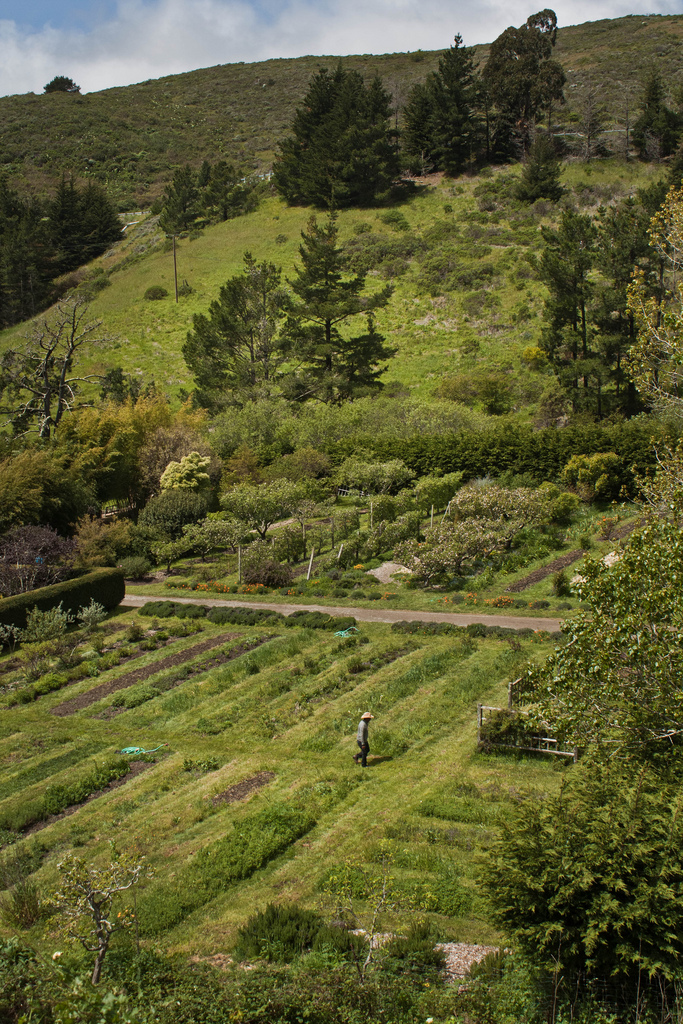 The Green Gulch Zen Center encompasses a vast array of tangible and intangible sources of heritage. For example, the Zen Center practices organic farming of vegetables and fruits, which is a tangible source in the physicality of the farming equipment and raised beds. It also displays an example of intangible in the community building and environmental appreciation produced from the gardening process. Also, the educational learning of gardening and agriculture falls into intangible. The meditation practice also functions as intangible and tangible. The meditation rooms with blankets to kneel on and traditional clothing are tangible. The spirituality and teacher-student relationships are intangible. In addition, the tea served in the teahouse as well as the traditional teapots, cups are tangible. The ritualistic aspects of the tea ceremony are intangible. The books sold in the bookstore are tangible, while the group discussions after lectures are intangible because they create development of community knowledge. The cookbooks and written recipes are tangible. Yet, the activity of cooking and experiencing food together is intangible and creates food education and experience.
Green Gulch follows the management blueprint designed by the original founders of San Francisco Zen Center. Both practicing monks and visiting resident students communally live in the space. Two cultures merge in the site: Western culture based on local agriculture and Japanese culture focusing on spirituality and aesthetics. The intangible heritage has become very important to preserve as originally developed by Suzuki Roshi, founder of San Francisco Zen Center.
Green Gulch produces spirituality by the use of its landscape and tradition. Green Gulch is not only a spiritual site for Buddhists but also open in many ways to public usage. Aesthetic values such as the atmosphere of solitude created by the Zen Center fosters spiritual values or just gives individuals a quiet place to think. Some visitors come solely seeking a place where they can seek generic spirituality. Green Gulch provides residents and visitors a place to meditate, alone or part of the community. Green Gulch also provides a rural and costal environment for individuals that enjoy the outdoors. Hikers and cyclists frequently take advantage of the land set aside by the Zen Center and the Nature Conservancy.


 Who Owns the Past? Cultural Heritage in the Digital Age