Category Archives: Microhistories
(9) Five Wounds Church:Interpretive Project Proflies-Mobile Detection
Mobile Detection:
Visitors who participate in a scavenger hunt become more observant resulting in a more meaningful experience. According to Erik Champion, navigation influences visitors in what to do, whereas exploration allows visitors to lead themselves where they want. In result, participants will experience their own interpretation of the environment that creates a whole new perspective. A scavenger hunt attracts visitors of all ages and especially children and adolescents. A scavenger hunt is an active way to get visitors involved with the church. Families can participate in a scavenger hunt and work together to figure out answers to clues and riddles regarding the historical and cultural heritage of the church. Children and adolescents are the main targeted audience along with parental supervision. With guidance and prior knowledge, family members can learn from each other and the scavengers hunt itself. The idea of answering the clues and riddles is to think about the many possible answers that can be used. There are many different ways to approach a scavenger hunt, but it takes some thought and energy. In consideration of the variability of age, there will be three levels of difficulty.They are easy, moderate, and hard. To make sure that there is no repetition of answers, fresh new clues and riddles will be provided each time.
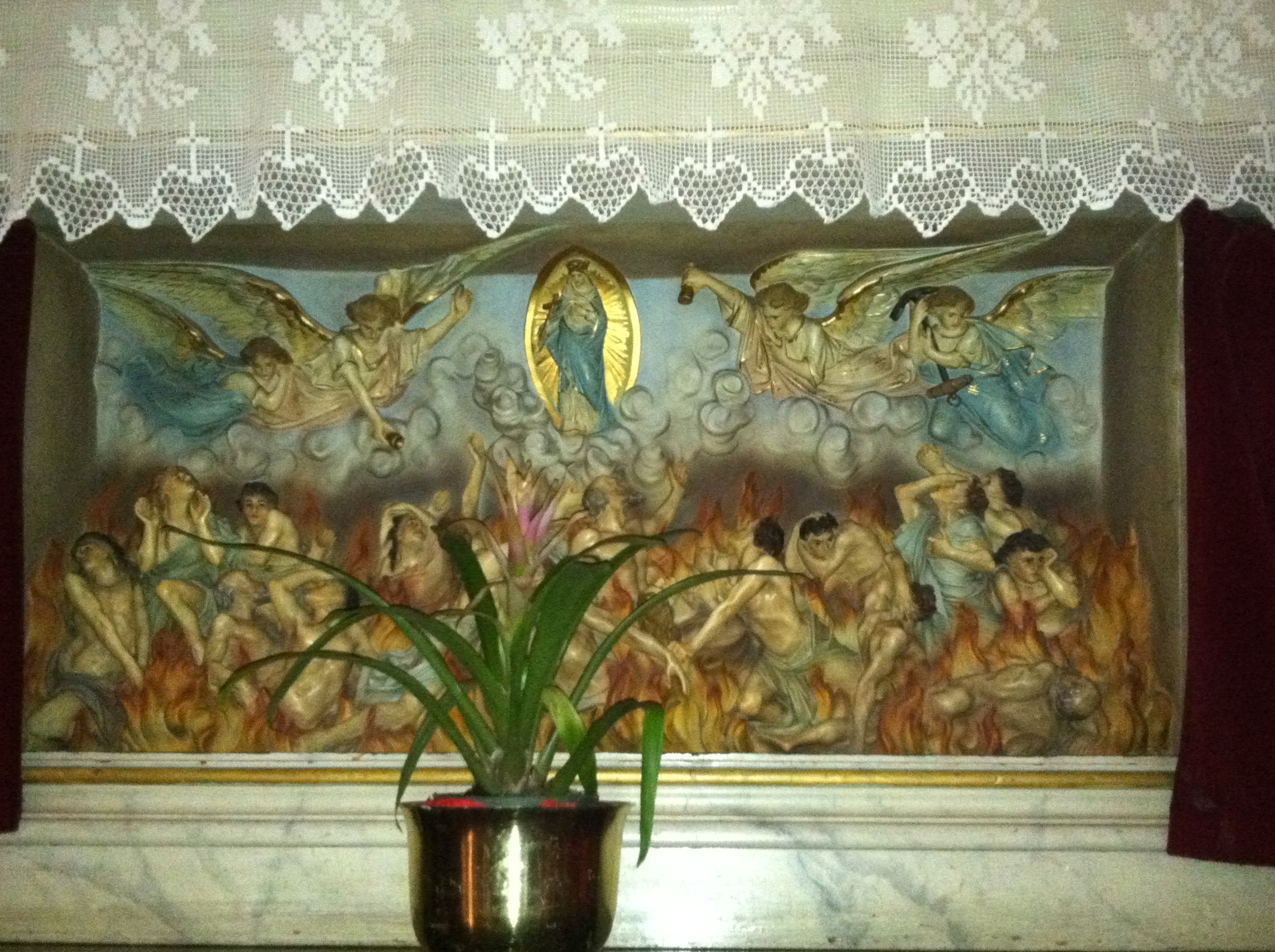
The scavenger hunt can consist of finding an image such as this one.
(10) Five Wounds Church: Interpretive Project Profiles-Ascertaining Authenticity

Interior of Five Wounds: Examine the Architectural style
Ascertaining Authenticity:
This ongoing project will address such questions of authenticity within the intangible and tangible portions of church structures. for example, making architectural descriptions available to audience members over the correct analysis of Five Wounds becomes foundational to any claims of “authentic” (or in this case, unauthentic) style. This project will be executed by reprimanding the official church website to correctly identify the buildings “authentic” style. How? By building paragraphs embodying a certain portion of Manuelian architecture, such as armillary spheres found on ships (a navigational instrument and the personal emblem of Manuel I), and then providing two pictures for the reader to choose from; one picture will perfectly embody the Manuelian style, and the other will not. We hope that this will begin to help audience members establish what the core representation styles of Manuelian architecture are in order for them to create critiques not only on the church of the Five Wounds, but what will ultimately serve them in any travels as they mention to their mate “Aha! I have seen such a structure before – this style is Manuelian!”

Exterior Picture: Examine the Architectural Style
(11) Five Wounds Church: Research Staff

Research Team Enjoying Portuguese Food in Little Portugal
Andres E. Tobar
Native to the City across the bay, he resurrected the Anthropology Club at City College of San Francisco after nearly a decade of being ignored. The Club has drawn notable attention form CCSF faculty/students and is now in its third strong year even in Andres’ absence since he transferred to UCB in 2010. Registered as a dual-major in Rhetoric and Anthropology with an emphasis on Cultural and Social Theory, Andres has recently been nominated to co-facilitate the University’s Association for Undergraduate Anthropologists and somehow also found time initiate the AUA’s Journal with Editors in Chief Judith Grey and Ryan Whitacre on top of taking four upper division courses. Future academic endeavors include some form of graduate level training to be decided on in the following year as he finishes his time at Berkeley as a Senior. However, academia plays second fiddle, remarks Andres, to his love for his Family and loyalty to the Bay Area.
Leonard Martinez
Nati ve of La Puente, CA. To the surprise of many, he transferred to UC Berkeley in the fall semester in 2009. His experience at UC Berkeley and his involvement with student organizations has been life changing. During the 2010-2011 academic year, Leonard served as Financial Director for Reflejos de Mexico De UC Berkeley and was recently promoted to President for the Fall semester in 2011. In addition, he was also the Chicano Studies representative for Ethnic Studies 5th Account, and the Chicano Studies student advisor to the department chair of Chicano Studies. In the fall semester of 2011, Leonard will be graduating with a double major in Chicano and Ethnic Studies and a minor in Anthropology. As an advocate for equal justice and immigration Leonard hopes for one day pursue a career in immigration law.
Joshua Sales

Is a native of Richmond, CA. Joshua will be graduating in the fall semester in 2011 from UC Berkeley with a major in Anthropology. Joshua considers himself a huge gamer and Golden State Warrior fan. In the future, he hopes to pursue a career in business administration and marketing.
SEE OUR CHURCH OF THE FIVE WOUNDS HERITAGE, REVITALIZATION AND SUSTAINABILITY PROPOSAL
Five Wounds Church Proposal
Green Gulch Zen Center: Wildlife

In order to understand the deep connection of the Green Gulch Zen community to the land, one must first have an understand of the history behind how the Zen Center came to acquire the land. At the time of the arrival of the Europeans, the watershed was in habited by the Coast Miwok tribe. The known history of the land between the 1800’s and mid-1900’s was that it was used for farming. In 1945, George Wheelwright, co-founder of Polaroid, purchased the land and turned the property into a family farm, which included the present day organic farm, as well as a number of dairy cows. Although Wheelwright was, in many ways, very connected to the land of Green Gulch, his intent to create a pasture for his livestock meant the construction of a dam, levees and drainage channels to divert the Redwood Creek, which runs through the property into the Pacific Ocean.
In 1972, Wheelwright sold the Green Gulch Farm to the Zen Center on two conditions: that members of Green Gulch Zen Center would maintain the working farm and, “in the spirit of the surrounding Golden Gate National Recreation Authority property,” remain open to rhe public for trails. Although use of the land belongs to the Green Gulch Zen Center, the area itself is an inholding of the National Park Service, with whom the Zen Center works closely to protect and conserve the land.
One of the founding principles of the Green Gulch Zen Center is that humans need to protect the environment from us, not the other way around. The community of Green Gulch has been, and continues to be, actively working to live harmoniously with the surrounding nature and to take measures to protect it.
Green Gulch Farm is the habitat of many diverse species of wildlife, including fish, birds, mammals and plants. The Redwood Creek, which runs through the property, is an essential spawning and rearing ground for coho salmon, steelhead trout and coastal cutthroat. In 2005, the coho salmon were listed as a federally endangered species and between 2007 and 2009, no salmon were seen during the winter run. However, in 2010, around 40 salmon were spotted and produced 23 clusters of eggs. This number however is only about 1% of the 1940 levels of coho salmon.The Green Gulch property is also home to many native songbirds, as well as numerous egrets and the Northern Spotted Owl. The pond that sits in the middle of the property was excavated by the National Park Service in 2009, to provide a habitat for the California Red-legged Frog.
Green Gulch is currently collaborating with the Park Service on a plan to restore the marshland in the lower fields. This plan, which would involve removing the parking lot that currently overlooks Muir Beach, in order to restore the land to its original marshland form. Through their work with NPS, they have “been studying the ecology of our watershed and asking ourselves questions about how the land might look and behave if left to itself.” One part of this process would involve removing the concrete channels which currently hold the stream flow, and allow this to run through the lower fields, now used for agricultural purposes.
Green Gulch Zen Center: Buddhist for a Day Program

Garden Center Statue at Green Gulch Farm Zen Center in Marin, CA
Buddhist for a Day Program: This program will allow people to experience the daily life of a monk. Extra activities will be included to enrich the guest’s experience, but the overall day will focus on learning about Zen Buddhism and Green Gulch. People interested in learning about the Buddhist lifestyle will benefit from the day. The following themes will be addressed: culinary through cooking classes, landscape through garden work, and spirituality through Zen practice. The specific audiences focused on include students of Zen Buddhism, Bay Area residents and international visitors.
Green Gulch Zen Center: Themes and Appraisal of Significance
The cultural heritage significance of Green Gulch Zen Center lies in its day-to-day practice within the normal parameters of life. We have classified several themes surrounding the site, which we feel contribute to its cultural heritage importance.
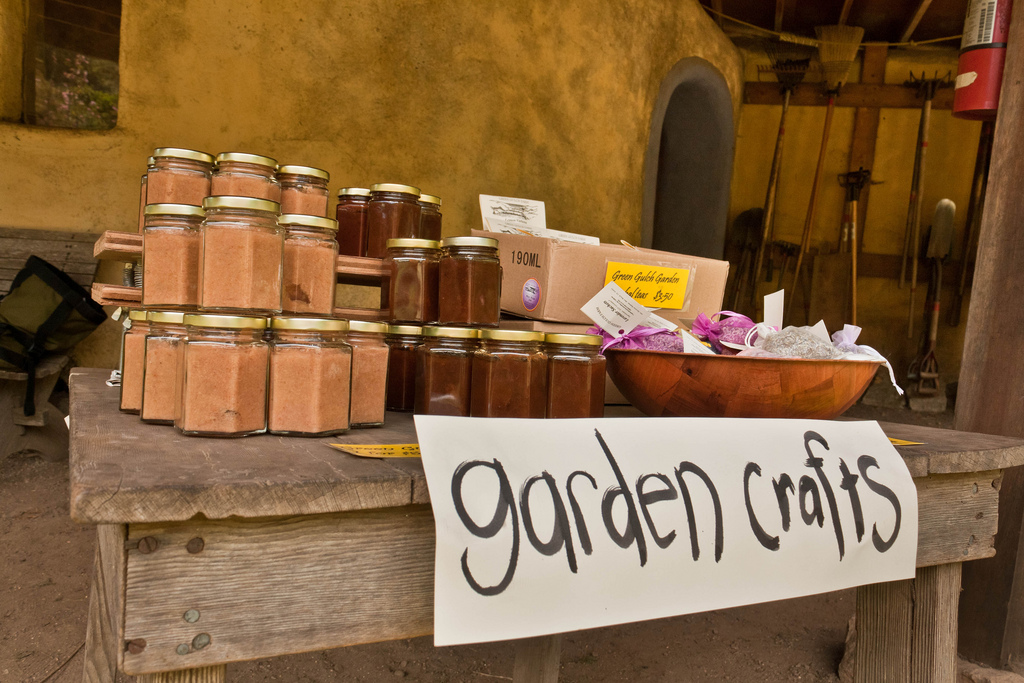
Outside of the garden center, a table is set out with jams and teas made from the garden.
Culinary
The connections between food and community are apparent at Green Gulch. The food preparation and sharing is a strong part of the Green Gulch experience. Through our K-8 program, we hope to educate children about the process of growing food and to use Green Gulch as a model for sustainable culinary practices. One potential challenge we foresee are distribution channels of food around local areas and furthermore internationally.
Landscape
This theme relates the spiritual nature of Green Gulch with the surrounding landscape. While the zendo is the place where formal meditation takes place, the entire property is a place of worship – through hiking the trails, enjoying the gardens and working the farm.
Preservation of nature
Since Green Gulch was founded in 1973, members of the Green Gulch community have focused on respect and cooperation with nature. Our proposed nature center would incorporate Buddhist teachings with educational guides for visitors, as well as work actively to sustain and preserve endangered wildlife.
History of Green Gulch and Surrounding Area
One theme that we feel would appeal to many visitors is using Green Gulch as a resource for those interested in Marin history. Because of its rich history in the area and cooperation with the land, we feel that Green Gulch is an ideal space for teaching others about the various transformations that Marin has gone through in the past few centuries. Archiving Green Gulch history along the line of archaeology, anthropology, and various other discourses will allow for the broader importance and modern relevance to contemporary issues that Green Gulch is addressing directly, for example through their on-site gardens and Green Restaurants.
Green Gulch Zen Center: Cultural Heritage Significance
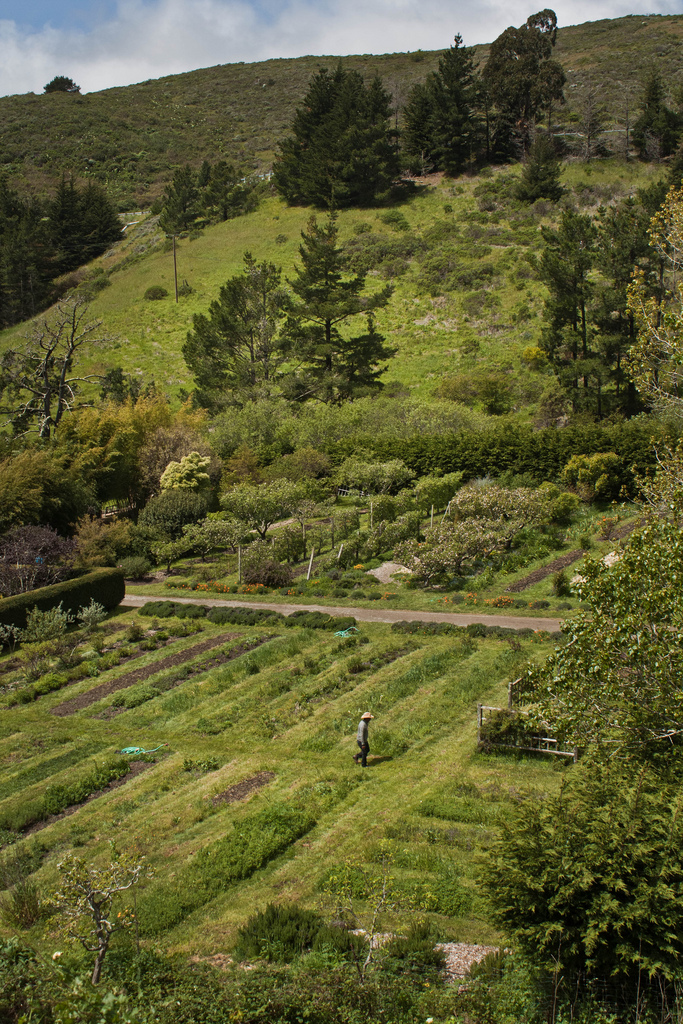 The Green Gulch Zen Center encompasses a vast array of tangible and intangible sources of heritage. For example, the Zen Center practices organic farming of vegetables and fruits, which is a tangible source in the physicality of the farming equipment and raised beds. It also displays an example of intangible in the community building and environmental appreciation produced from the gardening process. Also, the educational learning of gardening and agriculture falls into intangible. The meditation practice also functions as intangible and tangible. The meditation rooms with blankets to kneel on and traditional clothing are tangible. The spirituality and teacher-student relationships are intangible. In addition, the tea served in the teahouse as well as the traditional teapots, cups are tangible. The ritualistic aspects of the tea ceremony are intangible. The books sold in the bookstore are tangible, while the group discussions after lectures are intangible because they create development of community knowledge. The cookbooks and written recipes are tangible. Yet, the activity of cooking and experiencing food together is intangible and creates food education and experience.
Green Gulch follows the management blueprint designed by the original founders of San Francisco Zen Center. Both practicing monks and visiting resident students communally live in the space. Two cultures merge in the site: Western culture based on local agriculture and Japanese culture focusing on spirituality and aesthetics. The intangible heritage has become very important to preserve as originally developed by Suzuki Roshi, founder of San Francisco Zen Center.
Green Gulch produces spirituality by the use of its landscape and tradition. Green Gulch is not only a spiritual site for Buddhists but also open in many ways to public usage. Aesthetic values such as the atmosphere of solitude created by the Zen Center fosters spiritual values or just gives individuals a quiet place to think. Some visitors come solely seeking a place where they can seek generic spirituality. Green Gulch provides residents and visitors a place to meditate, alone or part of the community. Green Gulch also provides a rural and costal environment for individuals that enjoy the outdoors. Hikers and cyclists frequently take advantage of the land set aside by the Zen Center and the Nature Conservancy.
Alcatraz – Implementation
Native American history is a theme that runs through all of these projects. The overarching goal for this project is to increase awareness of and educate people about the Native American history of Alcatraz Island. Funding for the projects is expected to come from the federal government, donations, and the $26 fee to visit Alcatraz Island. The success of the projects would depend on cooperation between researchers, the NPS, and the Native American community, in order to gain more information and implement the activities.
Project # 1: Increased Tangible Heritage on Alcatraz Island

Specific objectives for this project include drawing attention to the Native American heritage on Alcatraz Island and preserving remaining tangible heritage, particularly graffiti. This project would entail setting up plaques around the island to help users find the graffiti and help viewers decipher what they say, installing memorials, preserving the remaining graffiti and developing an interpretive trail as an audio tour.
Project # 2: Storytelling
The particular goals for this project are to honor and revitalize Native traditions of storytelling, to provide employment for Bay Area Native Americans, and to teach visitors about Native American values, such as community and respect for elders. During the activity the visitors would gather around the campfire. Traditional foods like fry bread and coffee would be served. The stories would concentrate on the Native American presence on the island, as well as some traditional Native American tales. The content and delivery would largely be at the discretion of the storyteller.
Project # 3: Re-enactment of the Landing: “This Land is My Land”

This activity would start on the ferry ride to Alcatraz, during which Native American actors would explain briefly the history of the occupation. On the island, the visitors would then be escorted to the Warden’s House, which was the Native American headquarters during the occupation. Here the audience would experience a celebratory powwow, and afterwards hear the story about life on Alcatraz during the occupation and the speech by Richard Oakes. Visitors would also experience aspects of Native American culture such as jewelry-making. Finally, actors dressed as US marshals would escort visitors back to the ferry.

Project # 4: Picture Scavenger Hunt
Some specific goals for this project include encouraging research on Native American history, increasing visitor participation and expanding the representation of the island’s Native American history online. The participants would listen to an informative talk about Native American history. They would then be lent cameras and given brochures outlining the subjects of the history, and instructed to go around the island and take pictures of each subject, which would finally be compiled on a web site.
Project # 5: A Play of Multiple Voices
This project aims to establish ties among the communities involved with Alcatraz Island and its history. For this activity, an online survey would be created, collecting the input from all the key players of Alcatraz Island. Some additional interviews could also be conducted. On the basis of the collected information the play would be written and performed.
To read more about these Project Profiles, please go to the main page (Alcatraz – Native American Presence and Occupation) in order to download the full Site Management Plan.
Alcatraz – Key Players
People on Site and Scientific Interest Groups
Currently no permanent populations live on the island. Most of the people present on the island are visitors, NPS park rangers, volunteers for the Alcatraz Garden project and contractors who work on renovation. No archaeological research is currently being done on Alcatraz, as most of the research has been taken off site.
Organizations
Some of the key players are the organizations involved with Alcatraz, such as the PRBO and the U.S. Geological Survey, who are currently conducting a Landscape Survey. Outside of the NPS, there are groups that try to help keep our national parks accessible, such as The National Parks Conservation Association (NPCA), who are a nonpartisan group working to minimize threats to national parks.
International Community
Some other key players include visitors from different countries and regions, as well as recreationists like marathoners and hikers. The US National Park Service is working on developing sister park relationships with national parks all over the world. Other key players include school groups: part of the NPS budget is reserved for education.
Native Americans

Richard Oakes
Native Americans are also important key players for Alcatraz. This group includes the local Miwok and Ohlone Indians, those Indians who occupied Alcatraz from 1969 to 1971, and many other Native Americans for whom this island is a symbol of the Native American movement.
Local Business
Local business key players include all hotels, shops, restaurants, and tour companies that have ties to Alcatraz Island.
Descendants
Another group of key players includes the descendants of prisoners and the Federal Penitentiary employees at Alcatraz Island.
The following is a list of sponsors:
• Golden Gate National Parks Conservancy (The Gardens of Alcatraz)
• Federal Bureau of Prisons (Inmates perform maintenance work)
• The Friends of Civil War Alcatraz (docents of Civil War history)
• American Reinvestment and Recovery Act (solar panels to be installed on the island)
• Save American’s Treasures (Garden restoration)
• Alcatraz Cruises
The following is a list of academic partners:
• Golden Gate National Parks Conservancy Native Plant Nurseries
• American Youth Hostels
• Bay Area Discovery Museum
• Headlands Institute
• YMCA Point Bonita Outdoor & Conference Center San Francisco
• Exploratorium
To learn more, please go to the main page (Alcatraz – Native American Presence and Occupation) in order to download the full Site Management Plan.
By Tatyana Kovaleva
Alcatraz – Modern Context
Ownership and Legal Status
Alcatraz Island is managed by the National Park Service, one of eight bureaus run by the Department of the Interior, a Cabinet-level agency of the US Government. It is a part of the NPS Golden Gate National Recreation Area (GOGA). As a national park, Alcatraz is under the jurisdiction of Parks, Forest, and Public Property Code of Federal Regulations.
Buildings and Visitor Facilities

The island as a NPS and GGNRA park.
There are numerous buildings on the island, including the Guardhouse, the Cellhouse, the Officer’s Club, the Warden’s House, the Lighthouse, the Warehouse, the Power Plant, the Electrical Repair Shop, the Modern Industries Building, the New Industries Building, the Morgue, and the Recreation Yard. There are also gardens, including the Officer’s Row Gardens alongside the Cellhouse. Alcatraz includes a Parade Ground area and numerous trails and pathways that are accessible to visitors such as the Agave Trail.
Condition of the Site

An example of the ruins at Alcatraz.
The condition of buildings on Alcatraz varies. Some buildings, such as the Cellhouse and the Guardhouse, are renovated and accessible to the public. Other buildings, like the New Industries Building, are renovated externally, but are closed to visitors. Some structures, like the Warden’s House, have nothing but outside walls remaining.
Conservation
Many measures have been taken to preserve the man-made structures of Alcatraz and the natural features of the island. Organizations like PRBO, the US Geological Survey, Lutsko Associates, the Olmsted Center, and the Golden Gate National Parks Conservancy strive to preserve and properly manage the bird populations and the gardens of Alcatraz.
Current Points of Interpretation
The primary perspective of interpretation of Alcatraz is that of a federal penitentiary, because most of the surviving structures pertain to that period, which is also the most documented. Other aspects of history, such as the Native American presence or the military fort, are under-represented.
Tourist and Visitor Profiles

Alcatraz Cruises is the only commercial company that is allowed to dock on Alcatraz Island.
The Alcatraz experience is targeted at the general public, rather than specific groups. However, there are certain accommodations for groups with special needs, such as people with limited mobility. The Alcatraz management offers the Cellhouse guided audio tour in English, Spanish, German, French, Italian, Japanese, Dutch, Mandarin, Portuguese and Korean languages. Alcatraz Island does not have age-specific programs.
By Tatyana Kovaleva


 Who Owns the Past? Cultural Heritage in the Digital Age